A devastating earthquake shook Venezuela on June 24. In a situation of this magnitude, human pain has been overwhelming and somehow the Word of God has become a real refuge for people. Fathers André Delvaux and Jordan Sixto Sánchez, legionaries of Christ, share with us their testimony of how in the midst of pain, hope and faith in Christ are hope and encouragement.
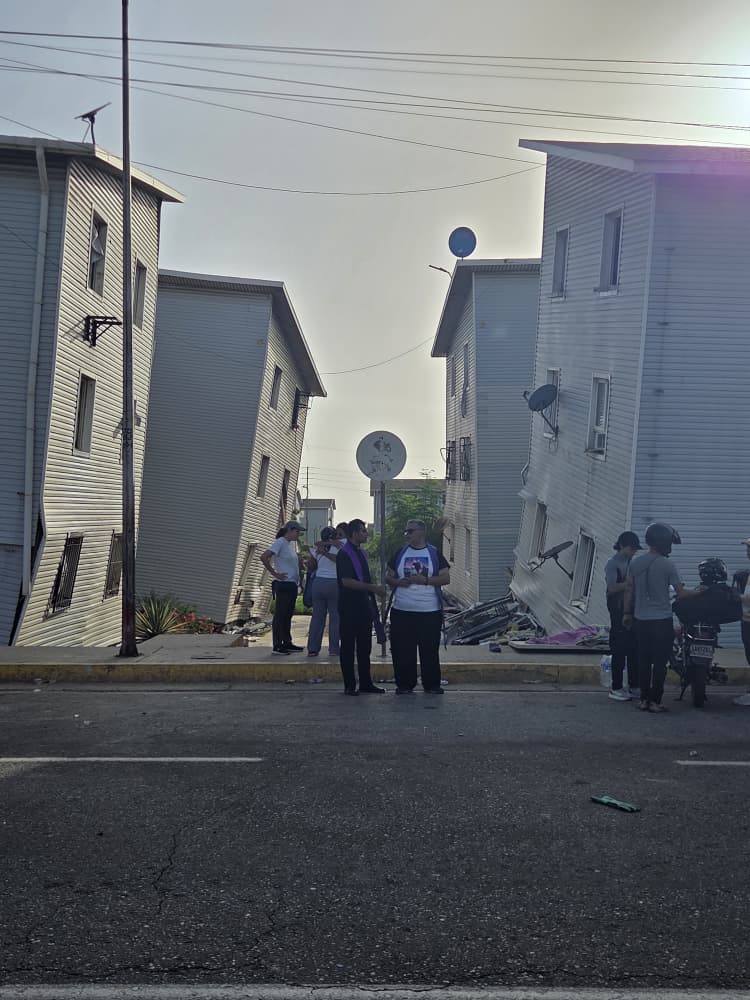
On June 24, Venezuela was struck by a devastating double earthquake measuring 7.2 and 7.5 on the Richter scale, plunging the country into a national emergency and leaving thousands dead and injured, countless material losses, and widespread destruction in regions such as Caracas, La Guaira, and Yaracuy. Amid the chaos, aftershocks, and uncertainty gripping thousands of affected families, the Church has been present not only through humanitarian aid but also as a source of comfort and encouragement.
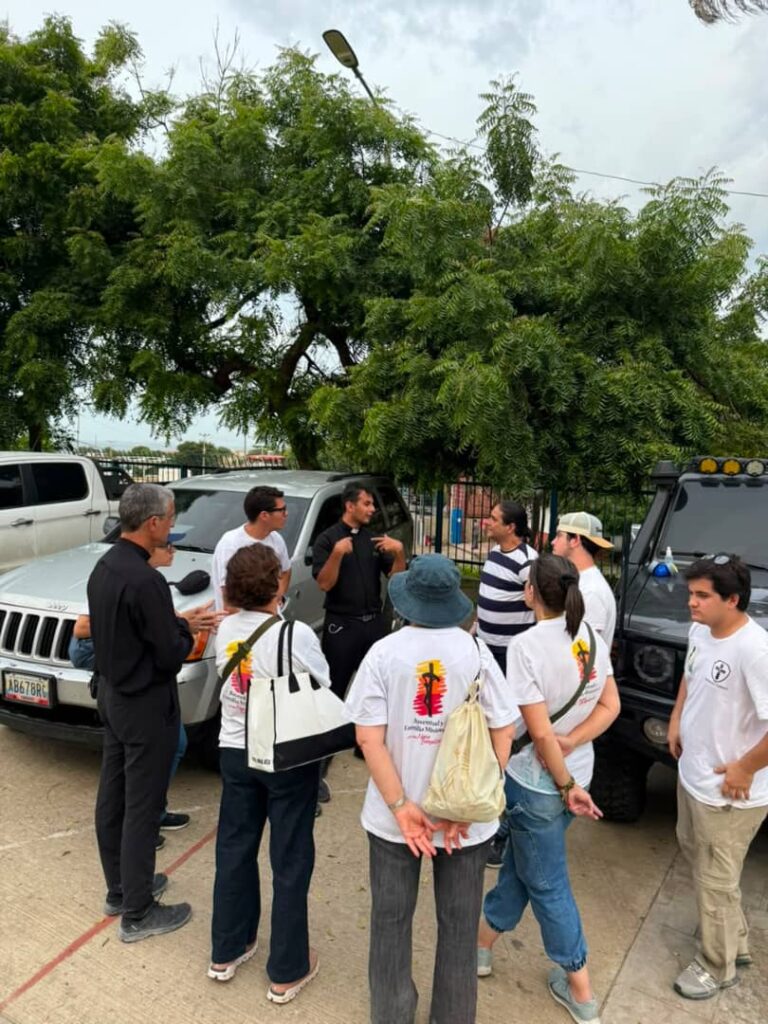
To delve deeper into this mission of faith, we spoke with Fathers André Delvaux and Jordán Sixto Sánchez, two Legionary of Christ priests who work apostolically in that country, and who have been on the ground together with members of Regnum Christi, who share with us how the Word of God is becoming the refuge, the embrace and the most solid hope to rebuild the soul of a wounded people.
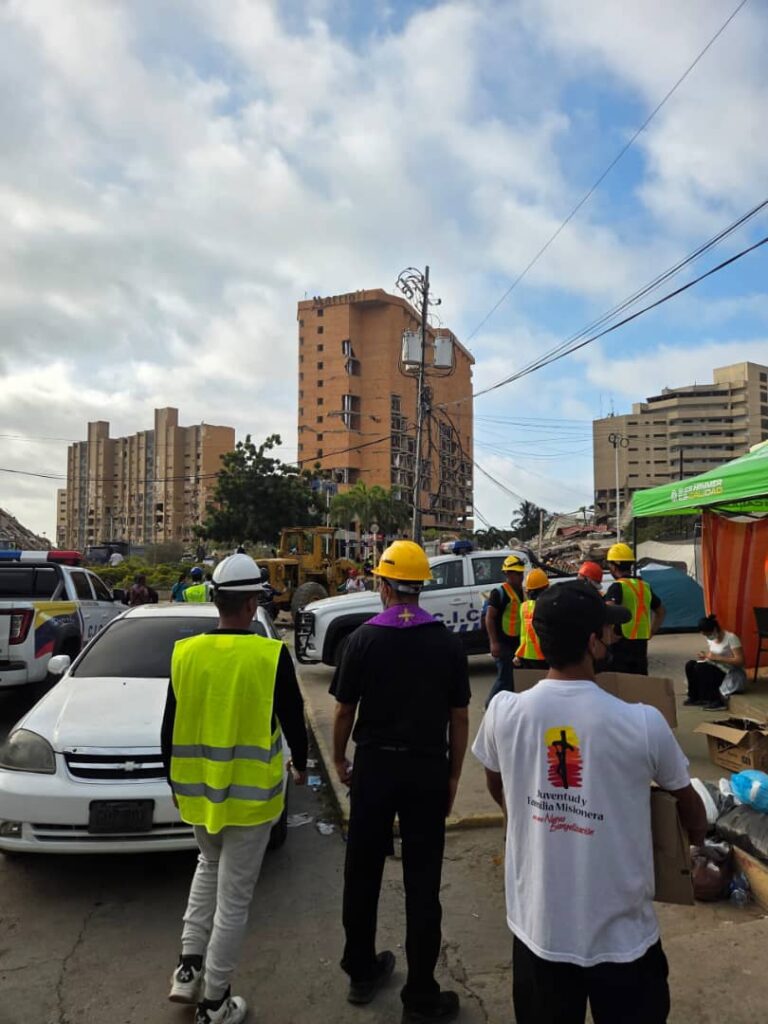
Parents, in the face of an emergency of this magnitude and from the field and sharing daily life with those affected, what is the most pressing reality that you have encountered on a material and emotional level?
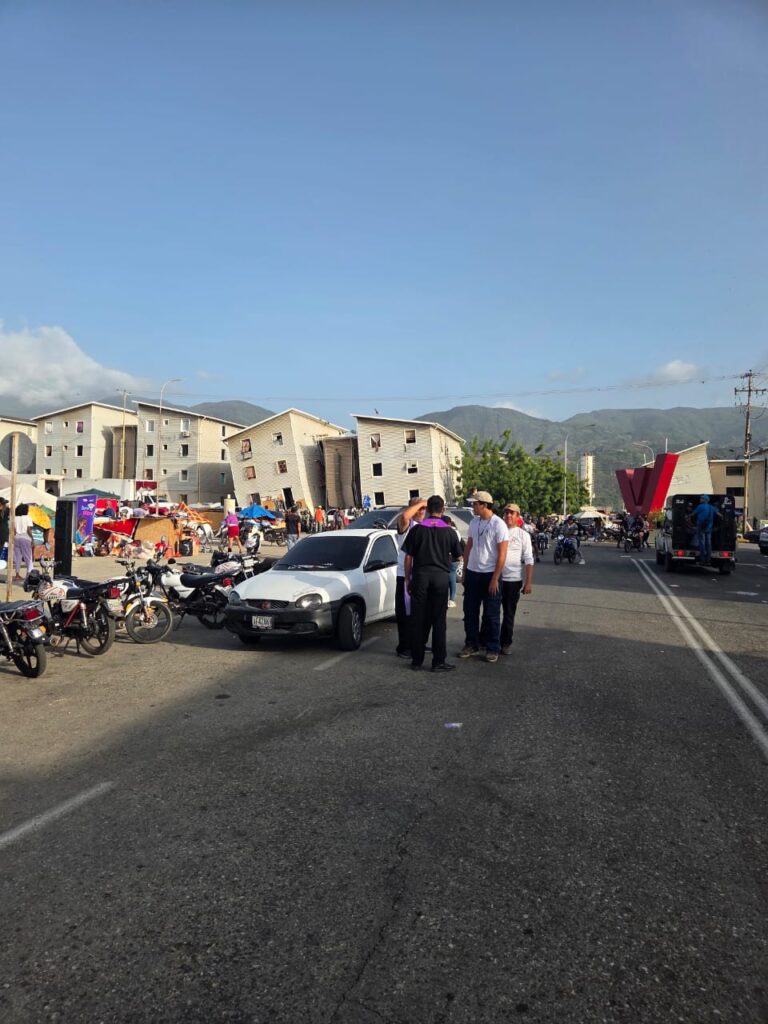
Fr. Jordan: On a material level, many people, especially in the La Guaira area, have lost everything. They have no homes, and with them, all their basic needs: clothing, food, work… The need is great, and we are looking for ways to respond as best we can. The RC has two collection centers in our schools, and we have also organized days to make sandwiches and hot meals to take to the affected areas.
On the other hand, emotionally there are various stages, going from the initial shock to the resignation and insertion of what is going to happen. This is where the need for the spiritual also arises and we as RCs and Legionaries are giving an immediate response by bringing the sacraments and the presence of God to all these places where faith has remained a true beacon of hope in the midst of so much pain and destruction.
Fr. André: The strongest thing about this is seeing destruction of this magnitude because it is a feeling that everything is over. People see that they no longer have anything, many people even left. I think, for example, of a parish priest from La Guaira, who could no longer celebrate mass because he no longer saw the community, his altar boys, because they were no longer there, they were gone: he lost almost 60% of the population of his parish. That feeling of absence, of no longer having those who were there before, generates insecurity, emptiness. But at the same time, there is faith, people help each other a lot.
At the same time, many wonder “why did this happen, why?”, and the explanation is difficult. This is very hard. And in this time of searching for reasons, they do not stop believing in God, they continue believing and searching for God.
The most powerful thing about this is seeing destruction of this magnitude because it gives the feeling that everything is over.
Right now, human pain is overwhelming. In what way does the Word of God become a real refuge for people and how do you, as a legionary priest, manage to transmit that message of hope and closeness of Christ?
Fr. Jordan: People were waiting for God’s answer to their prayers. And this answer has translated into the tremendous efforts of so many sectors: the population that has rallied to help, the rescuers who work tirelessly, the people who have been rescued, those families who have been able to say their final goodbyes to their loved ones, and also our presence. Seeing the priest in the midst of suffering has become for many people a ray of light illuminating them in the midst of such great pain and darkness. When they saw us among the collapsed buildings and rubble, people told us, “No one from the Church had come,” “We were waiting for someone to come.” People see us and want to see God; they seek Him in the midst of pain and tragedy, and they cling to Him.
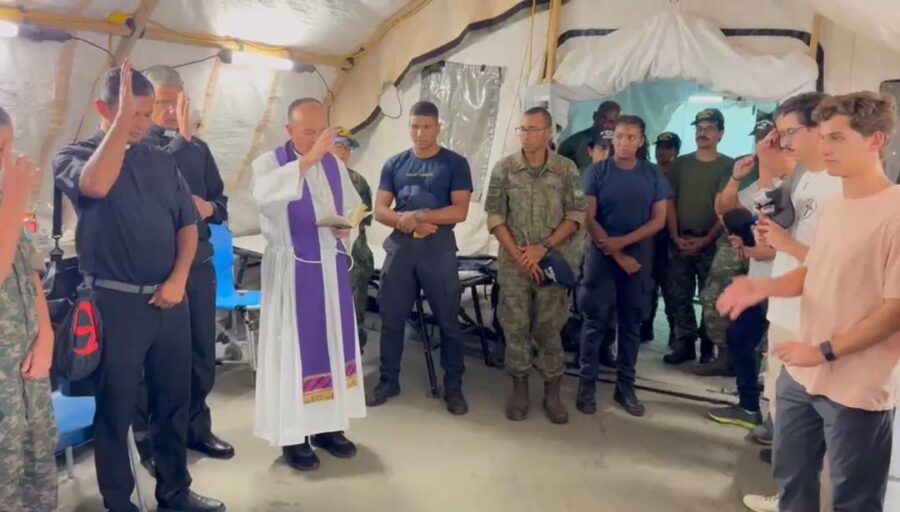
In recent days, those of us who have been in the La Guaira area have been asked by the governor’s office for help in two areas: one has been providing spiritual support in the area of the temporary camps (shelters), where groups of missionaries have been helping to listen, organize games with the children, and pray for the needs of these people; the other place has been the makeshift morgue where all the bodies that have been recovered in the La Guaira area arrive, and where families come to identify their loved ones and say a final goodbye. There, two or three priests are present every day, accompanying the families and entrusting the souls of the deceased to God.
People see us and want to see God, they seek Him in the midst of pain and tragedy, and they hold on to Him
Fr. André: We use the Word primarily in preaching. And it’s a delicate matter because it can happen that it doesn’t connect with people’s real lives, with their pain, their grief, their mourning. From the liturgy, people are very grateful when the Word connects with their lives, when they manage to enter into it, and in this way the Word illuminates. But when you go to a refugee camp, to people who have lost everything, the starting point is to listen and be there, to feel with the people, their suffering, and the Word manifests itself with a look, with an embrace, where the Word is embodied in mercy.
Eventually, one can connect with a word and experience God’s presence. The goal is for people to have a personal experience, not to provide easy answers.
This strong experience transforms those who receive help, but also those who provide it. As a legionary of Christ, how does this mission in Venezuela redefine your own vocation of service and what testimony of faith?
Fr. Jordán: This has changed everything for me, it changed our apostolic dynamic and it is also defining my priesthood. On the one hand, as a legionary in Caracas, my mission was that of school chaplain and director of the ecyd, and my daily efforts were focused on this work. When this tragedy happened, my days have been about getting food for the victims, seeing what needs we can cover and being in La Guaira helping and spiritually accompanying those who need it most. Just yesterday I had only been a priest for two months and I saw how God was preparing and waiting for me for this moment.
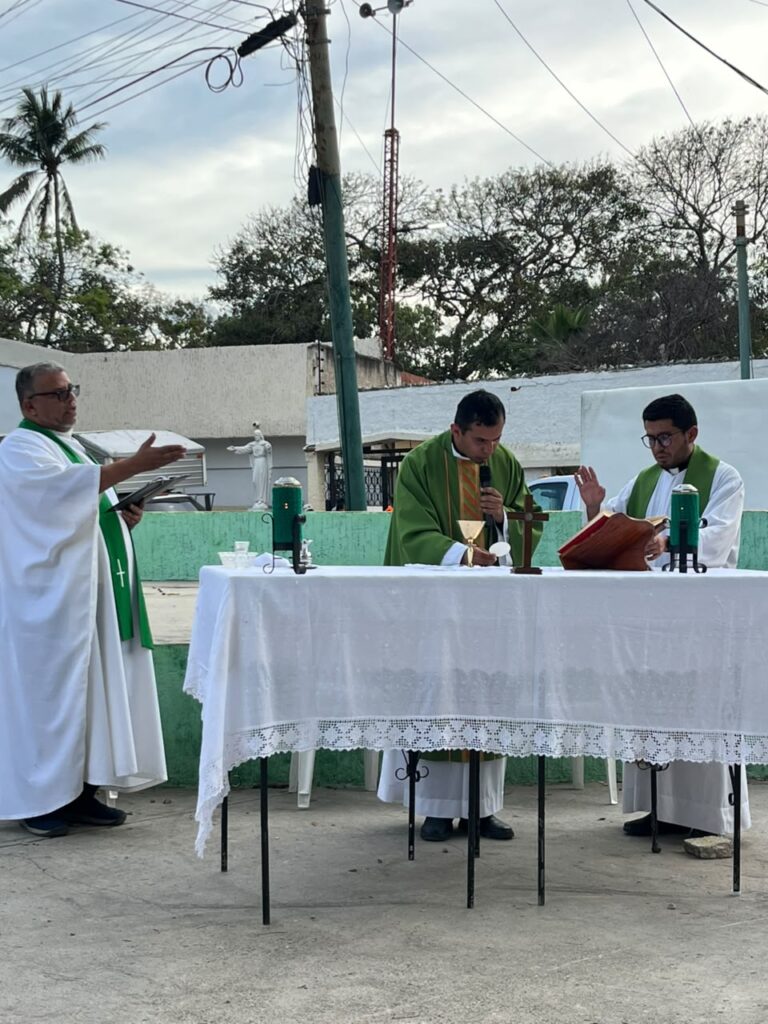
As a priest I also have to be there rescuing souls, giving strength to those who should be collapsed, I have discovered how great what the priest can do and how much people value and appreciate that we are there. I have been able to confess, give anointings, accompany families in the last farewell to their loved ones, I have celebrated mass in the squares and seen the faith of those people. All of this commits me and makes me see the great responsibility and mission of the priest and how even in the most atrocious of the scenarios that I have been able to see, there is also God, people have faith and then I have to be there and be able to bring God to all those who need Him and are waiting.
Fr. André: In a situation like this, one feels very powerless, seeing that personal gifts are not enough. The truth is, one must be very strong in faith, and that is a gift from God, so that one can transmit the Word, the faith, show that light, that path of answer which is not me, but entirely Christ, the Holy Spirit. Thus, humility allows one to live through such a situation and let God do things, to let Him be the one, since only God can rebuild hearts, people’s lives. Therefore, we must be believers, people of faith, to let God speak and do things through us.