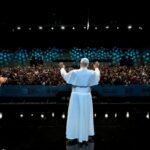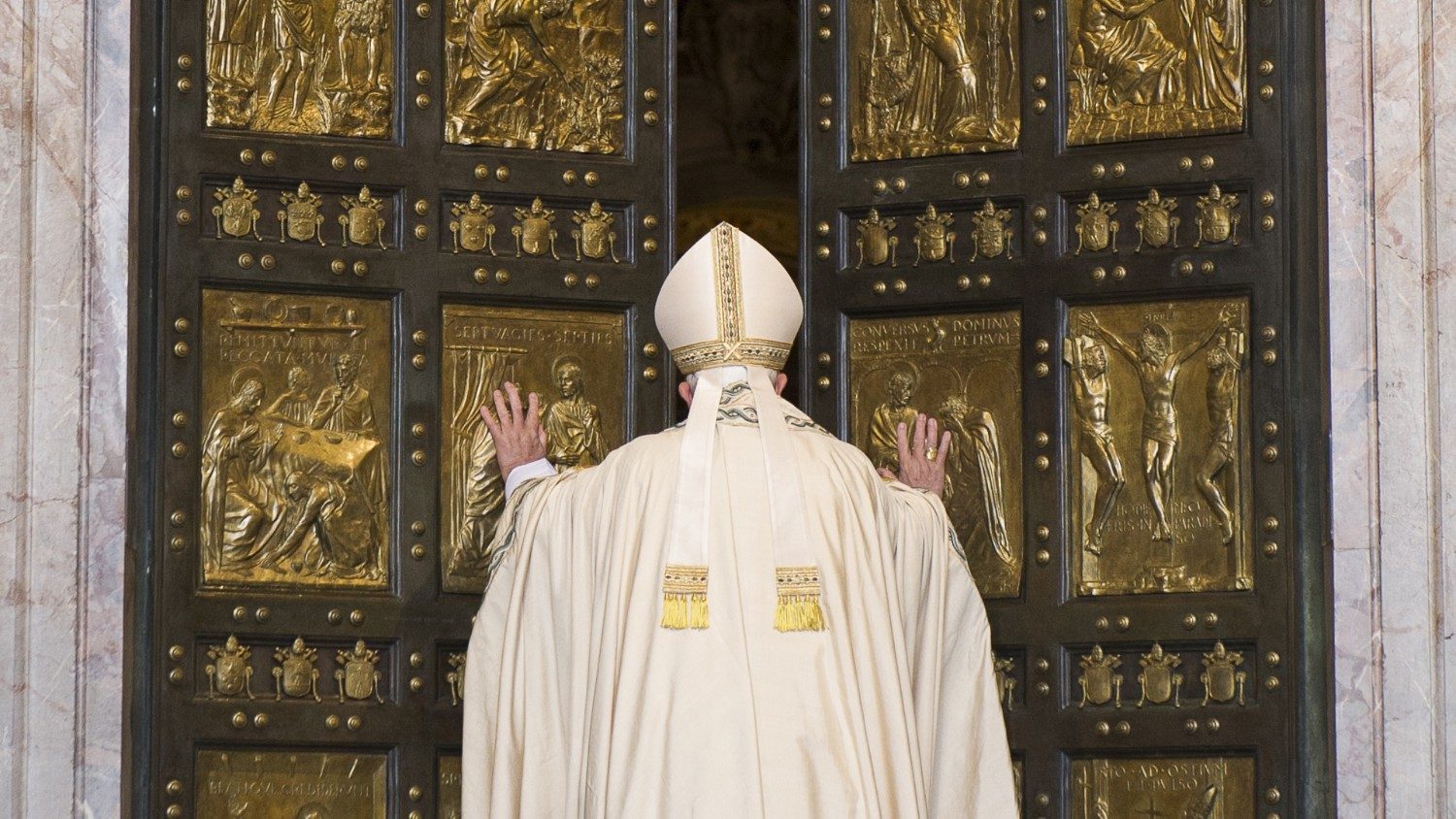
On December 24, 2024, at 7 p.m., Rome time, the Jubilee 2025 began with the opening of the Holy Door at St. Peter’s Basilica. From that moment, Catholics and the world celebrate the “Holy Year,” because it is a time in which we experience that God’s holiness transforms us.
What is the Jubilee and why is it celebrated?
According to the information presented on the official website of this event, the ‘Jubilee’ is the name of a particular year: it seems to derive from the instrument used to indicate its beginning; it is the yobel, the ram’s horn, whose sound announces the Day of Atonement (Yom Kippur). This feast is celebrated every year, but it acquires a particular meaning when it coincides with the start of the jubilee year. In this regard, we find an initial idea in the Bible: it was to be called every 50 years, because it was the ‘extra’ year; it was to be lived every seven weeks of years (cf. Lv 25:8‑13). Although difficult to implement, it was proposed as an occasion to restore the proper relationship with God, with others, and with creation, and involved forgiving debts, restoring alienated lands, and resting the land.
The Jubilee, instituted by Boniface VIII in 1300, is a celebration of divine mercy that has profoundly marked the history of the Church. This special time, characterized by the granting of plenary indulgences, invites the faithful to a profound spiritual renewal and a renewed commitment to the Gospel. Over the centuries, the Jubilee, also called “Holy Year,” because it is a time when we experience that God’s holiness transforms us, has evolved, adapting to the needs of the Church and to historical circumstances. From its origin, linked to pilgrimage to Rome, it has become a time of grace and forgiveness, in which the faithful experience in a special way the closeness of God and communion with the universal Church.
We share official information about Jubilee 2025, entrusting to our Lord Jesus Christ its evangelizing fruits for the good of all humanity:
Letter from Pope Francis to H.E. Mons. Rino Fisichella for Jubilee 2025
To dear brother, Monsignor Rino Fisichella,
President of the Pontifical Council for Promoting the New Evangelization
The Jubilee has always been an event of great spiritual, ecclesial, and social importance in the life of the Church. Since Boniface VIII established the first Holy Year in 1300—with a cadence of one hundred years, which later shifted to the biblical model of fifty years, and subsequently fixed at twenty-five—, the faithful people of God have experienced this celebration as a special gift of grace, characterized by the forgiveness of sins and, in particular, by indulgence, a full expression of God’s mercy. Usually, at the end of a long pilgrimage, the faithful access the Church’s spiritual treasury by passing through the Holy Door and venerating the relics of the Apostles Peter and Paul kept in the Roman basilicas. Millions of pilgrims have visited these holy places over the centuries, bearing witness to their enduring faith.
The Great Jubilee of 2000 introduced the Church into the third millennium of its history. Saint John Paul II had eagerly awaited and desired it, hoping that all Christians, overcoming their historical divisions, could celebrate together the two thousand years since the birth of Jesus Christ, Savior of humanity. Now, as we approach the first twenty-five years of the 21st century, we are called to initiate a preparation that allows the Christian people to live the Holy Year in all its pastoral significance. An important step in this was the Extraordinary Jubilee of Mercy, which allowed us to rediscover the strength and tenderness of the Father’s merciful love, so that we too could become his witnesses.
However, in the last two years, no country has been unaffected by the unexpected epidemic that, in addition to revealing the drama of dying in solitude, uncertainty, and the fleeting nature of life, has also changed our way of living. As Christians, we have shared with our brothers and sisters the same sufferings and limitations. Our churches have been closed, as well as schools, factories, offices, shops, and recreational spaces. We have all seen some freedoms limited, and the pandemic, besides causing pain, has sometimes awakened doubt, fear, and disorientation in our souls. Scientists have quickly found a first remedy that gradually allows us to return to daily life. We trust fully that the epidemic can be overcome and that the world will regain its rhythms of personal relationships and social life. This will be easier to achieve if we act in solidarity, so that the most disadvantaged populations are not neglected, but that discoveries and necessary medicines can be shared with everyone.
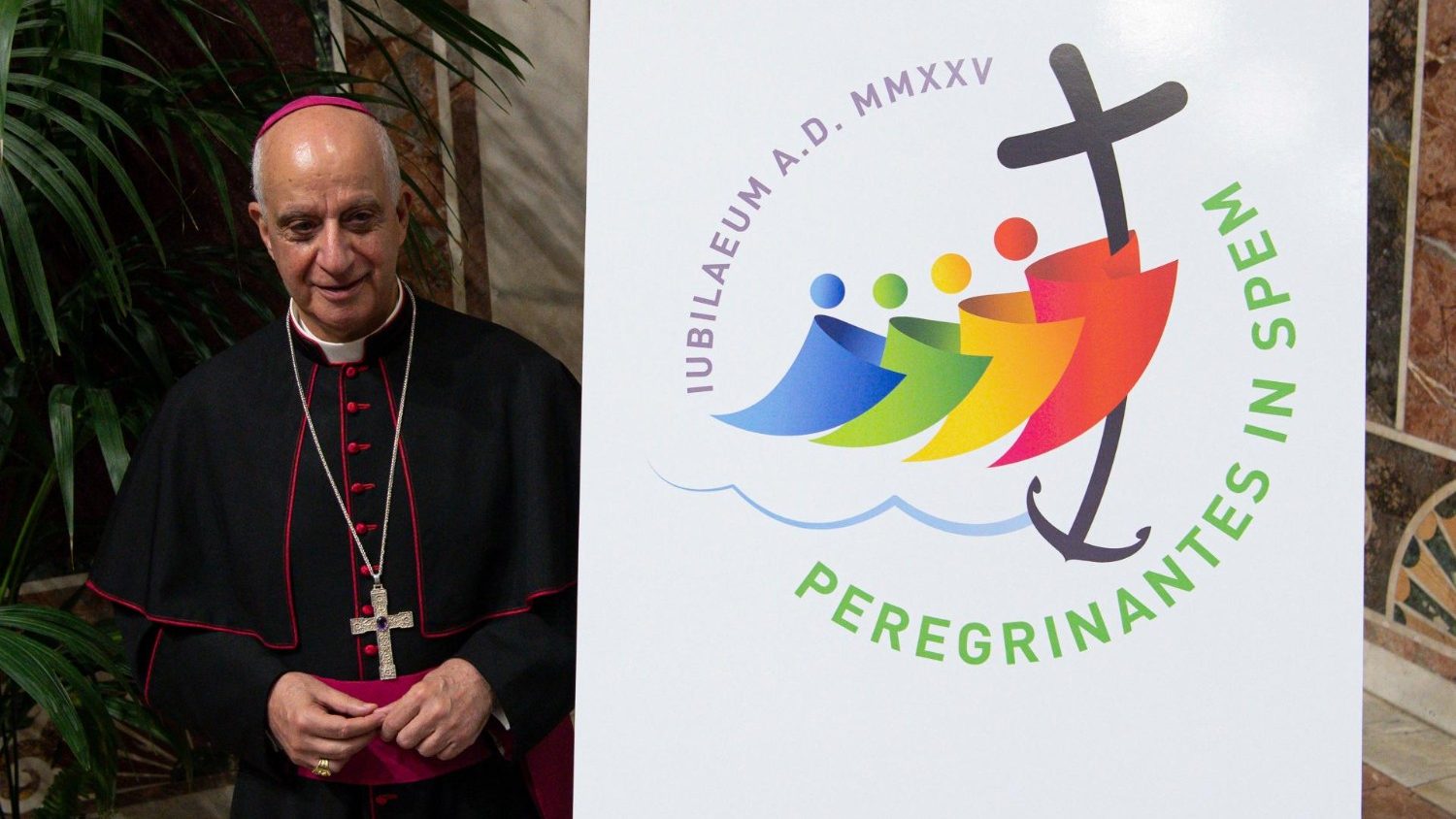
We must keep alive the flame of hope that has been given to us, and do everything possible for each person to regain the strength and certainty to look to the future with an open mind, a trusting heart, and broad horizons. The upcoming Jubilee can greatly help to restore an atmosphere of hope and confidence, as a sign of a new rebirth that we all perceive as urgent. For this reason, I chose the motto Pilgrims of Hope. All this will be possible if we are able to recover the sense of universal fraternity, if we do not turn a blind eye to the tragedy of rampant poverty that prevents millions of men, women, young people, and children from living humanely with dignity. I especially think of the numerous refugees forced to leave their lands. Hopefully, the voices of the poor will be heard during this time of preparation for the Jubilee, which, according to biblical mandate, restores access to the fruits of the earth for everyone: “You may eat what the land produces during its sabbath; you, your servant, your maid, and your hired worker, as well as the resident alien who lives with you; and the animals in your land may eat all their produce” (Lv 25:6-7).
Therefore, the spiritual dimension of the Jubilee, which invites us to conversion, must be united with these fundamental aspects of social life, to form a coherent whole. Feeling all pilgrims on the earth that the Lord has placed us on to cultivate and care for (cf. Gn 2:15), let us not neglect, along the way, the contemplation of the beauty of creation and the care of our common home. I hope that the next Holy Year will be celebrated and lived with this intention as well. In fact, an increasing number of people, including many young people and adolescents, recognize that caring for creation is an essential expression of faith in God and obedience to his will.
I entrust to you, dear brother, the responsibility of finding appropriate ways for the Holy Year to be prepared and celebrated with deep faith, living hope, and active charity. The Dicastery for Evangelization will know how to make this moment of grace a meaningful stage for the pastoral care of the particular Churches, both Latin and Eastern, which in these years are called to intensify their synodal commitment. From this perspective, the pilgrimage toward the Jubilee can strengthen and manifest the common path that the Church is called to walk to become increasingly a sign and instrument of unity in the harmony of diversity. It will be important to help rediscover the demands of the universal call to responsible participation, valuing the charisms and ministries that the Holy Spirit continues to grant for the building up of the one Church. The four Constitutions of the Second Vatican Council, along with the Magisterium of these decades, will continue to guide and direct the holy people of God, so that they may progress in the mission of bringing the joyful proclamation of the Gospel to all.
As is customary, the Bull of convocation, which will be published at the appropriate time, will contain the necessary indications for the celebration of the 2025 Jubilee. During this preparation time, I am pleased to think that the year 2024, which precedes the Jubilee event, can be dedicated to a great “symphony” of prayer; above all, to recover the desire to be in the Lord’s presence, to listen to Him, and to adore Him. Prayer, to thank God for the many gifts of His love for us and to praise His work in creation, which commits us to respect and act concretely and responsibly to safeguard it. Prayer as the voice “of one heart and one soul” (cf. Acts 4:32) that translates into being supportive and sharing daily bread. Prayer that allows every man and woman in this world to turn to the one God, to express what is in their heart’s secret. Prayer as a master way toward holiness, leading us to live contemplation in action. Ultimately, an intense year of prayer, in which hearts can open to receive the abundance of grace, making the “Our Father,” the prayer Jesus taught us, the program of life for each of His disciples.
I ask the Virgin Mary to accompany the Church on the path of preparation for the grace-filled event of the Jubilee, and with gratitude, I send you, and your collaborators, my Blessing.
Rome, Basilica of St. John Lateran, February 11, 2022, Memorial of Our Lady of Lourdes.
FRANCIS
Reference images courtesy of vaticannews.va