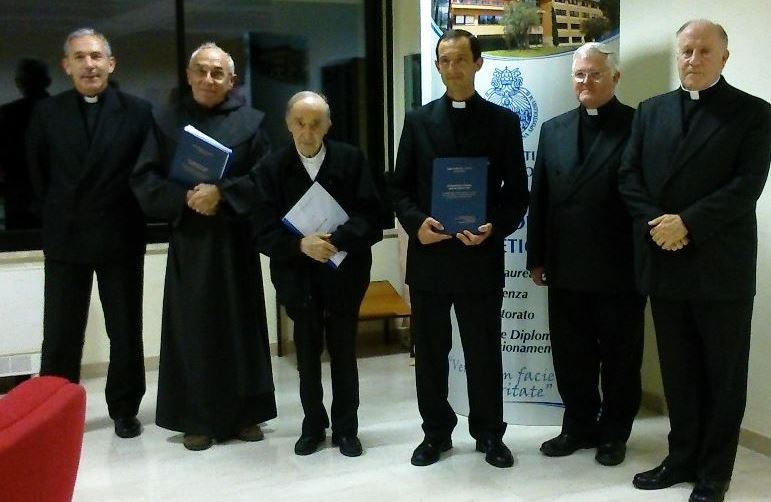
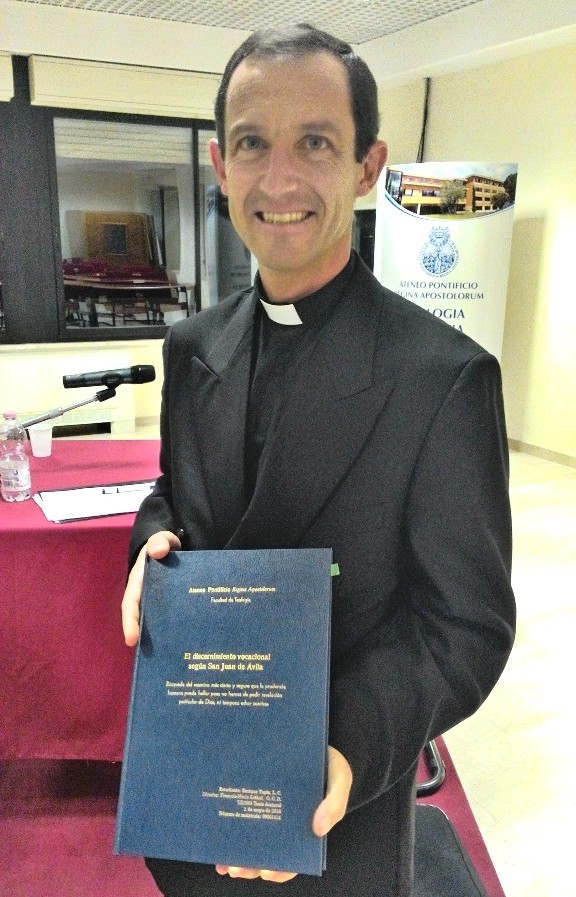
“The Vocational Discernment According to Saint John of Ávila” is the title of the thesis presented by the novice instructor of novices from Salamanca, P. Enrique Tapia, LC, to obtain his doctorate in the faculty of theology at the Pontifical Athenaeum Regina Apostolorum, in Rome.
His thesis is divided into three parts: a terminological and historical approach to vocational discernment; an analysis of the practice and doctrine regarding vocational discernment in Saint John of Ávila; and a presentation of a proposal to put into practice the teachings of Saint John of Ávila in our days.
As Father Enrique explained, he chose this field of study because “I wanted a topic that would help me in my ministry and also help the Legion; vocational discernment is one of the themes that has been more present in recent years and in which there was a need to deepen (not only in the Legion but throughout the Church, as can be seen in the recent Ratio Fundamentalis Institutionis Sacerdotalis, published by the Holy See on December 8, 2016).”

Five Elements of a Vocation
In light of his research, Father Enrique considers that when discerning a vocation, some fundamental aspects must be kept in mind, which are:
The “divine call”: this is the most spiritual aspect and the least externally verifiable (in itself, it cannot be subject to verification), but it is the foundational element of every vocation: it is God who calls.
Secondly, the suitability of the candidate: physical, psychological, human, intellectual, moral, and spiritual. “Suitability means being fit, having the set of qualities necessary for a particular state of life and mission” –Father Enrique explained–. According to the testimony of Tradition, vocation manifests primarily through aptitudes. Suitability is the first sign of a possible vocation. God, whom He chooses for a mission, prepares and arranges with specific qualities. And the Church, throughout history, has legislated on the necessary requirements for a ministerial or consecrated vocation.
Right intention. “Vocation intention is right when it looks toward the proper end, which is solely total love and exclusive service to God. Candidates for the priesthood and the consecrated life, with the help of their formators –the rector of the Salamanca seminary pointed out–, must examine these motivations sincerely to evaluate whether there is or not rectitude of intention in the path undertaken.”
Furthermore, there must be a free and generous response. “Sacred Scripture clearly shows how God respects the freedom of those He calls, only expecting a free and generous response. Throughout history, the Church has affirmed that anyone who wishes to dedicate their life to God in the priesthood or consecrated life must do so freely,” Father Enrique noted.
The call or approval by the Church constitutes the fifth element: “Since Sacred Scripture, even in post-Easter times, we see how when God calls a person, they submit to the leaders of the community,” he explained.
The tribunal that judged the thesis, composed of Fathers François Marie Léthel, OCD (thesis director), Florián Rodero, LC (second reviewer), and Edward McNamara, LC (dean of the faculty of theology), awarded it Summa cum laude. Several members of Father Enrique’s family, as well as several Legionaries of Christ from Rome and Mons. Juan Esquerda Bifet, a great expert on Saint John of Ávila, attended the thesis defense.