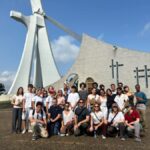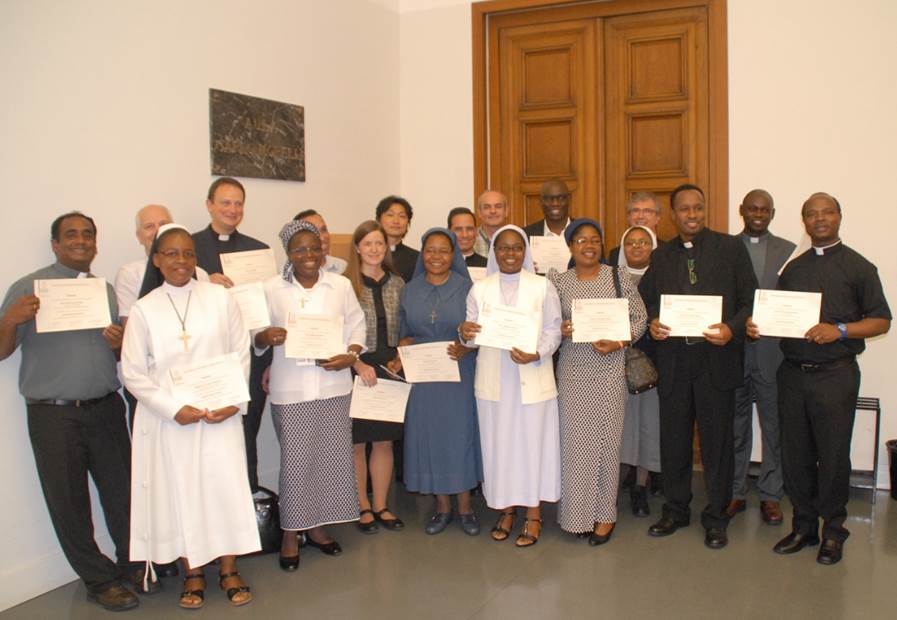
On June 14th, the closing of the Diploma for the protection of minors organized by the Center for the Protection of Minors (CCP) sponsored by the Institute of Psychology at this university took place at the Pontifical Gregorian University. Nineteen students received their diplomas, 12 of them men and 7 women; 11 came from African countries, 2 from Asia, 4 from Europe, 2 from Latin America, and 1 from the United States. Among the graduates was P. Gerardo Flores, LC, who was rector of the vocational centers in Monterrey and Guadalajara and is currently collaborating in the initial formation area within the General Directorate.
P. Gerardo, what does the diploma program you just completed at the Center for the Protection of Minors consist of?
Pope Francis wrote a letter to P. Hans Zollner, S.J., president of the CCP, in which he described his perception of this effort. I believe that before delving into the details of the course, it is worth reading what the Holy Father wrote: “I want to thank you and your collaborators for this initiative that helps prevent child abuse. You are making a great effort for the prevention and healing of child abuse… I send my greetings to those who complete the course. I wish them courage and patience; may they be brave and proactive. I assure you that they will encounter many smiles of gratitude.”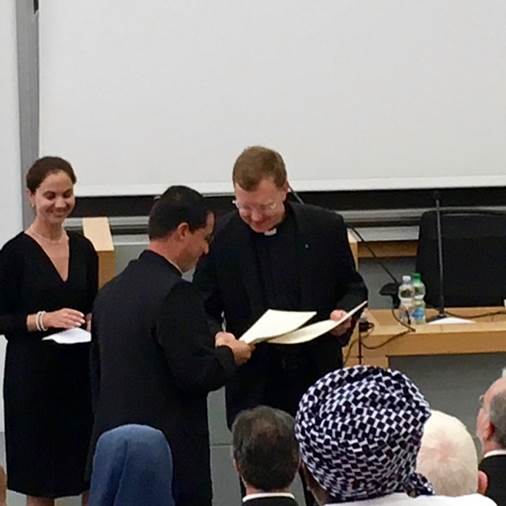
This diploma program is part of the Church’s response to the phenomenon of child abuse. The theme is, therefore, sexual abuse, approached in an interdisciplinary manner: psychological, sociological, theological, canonical, moral, therapeutic, and pastoral. They proposed a pathway to help us understand the scope of sexual abuse of minors worldwide and within the Church. It has made us aware of the culture of silence surrounding abuse, the harm it causes to victims and those around them. We also addressed strategies for prevention, victim support in case abuse occurs, and how to help perpetrators face the consequences of their acts before civil and ecclesiastical justice and prevent recidivism.
The methodology was that of a seminar, allowing everyone’s participation, discussion, and case study analysis. The course was divided into six modules over twelve weeks. Each seminar lasted two weeks, requiring daily attendance at the university throughout the morning and sometimes in the afternoon. The seminars were: Sexual abuse (terminology, definitions, methodology); Children’s rights and development (development, safety, psychology, rights); Safe and sacred environments (prevention measures); Abuse of faith (theology and spirituality); The truth will set you free (justice, information, and truth); Growth after sexual abuse (various ways to aid healing).
This is a social reality that wounds and scars; what is your opinion on this?
We must acknowledge that sexual abuse of minors is a real problem in society at large and also within the Church. It is shameful to admit that it has also occurred in our congregation. The Legion has taken a genuine commitment to do everything possible to prevent it and to place the healing of victims at the center. As Pope Francis states, this must be a priority above any other considerations of fame, institutional prestige, desire to avoid scandal, etc.
In January 2015, our General Director promulgated Territorial Standards for the accreditation of safe environments, applicable in all territories where external organizations are not available to certify work in abuse prevention. These territories aim to meet standards grouped into prevention measures, a rapid response to any complaint or suspicion of abuse, and supervision and follow-up of those found guilty. In addition to proposing codes of conduct, the need for training Legionaries and all persons working with minors to recognize, prevent, and know how to act in case of abuse is emphasized.
It is a difficult topic, even unpleasant from a human perspective. But we, as good shepherds, must train ourselves to know how to prevent abuse, how to help victims, and how to act responsibly. Sometimes we might think that common sense is enough, but I believe that someone who holds such a reasoning may be falling into a serious omission.
I am currently in Rome supporting the renewal process of our vocational centers, and I am involved in reflecting on our formation system from its earliest stages. The diploma program, with its interdisciplinary approach, has been very enriching and has touched on important aspects of priestly and religious formation. There are areas where we are providing adequate training. Others where we can and must improve. The recent guidelines sent by our General Director to rectors and formation teams in apostolic works are already a sign of this direction.
Any important lessons from this diploma program?
That we must do everything possible to prevent child sexual abuse. But knowing it theoretically is one thing; putting a face to the pain is another. It deeply impacted me to meet and speak with several victims or survivors; we could glimpse their suffering. From the beginning, Father Zollner warned us that we would not just be doing an academic exercise but trying, as far as possible, to understand the profound damage and pain caused by abuse, especially if the perpetrator is a priest. And, truly, the warning was fulfilled.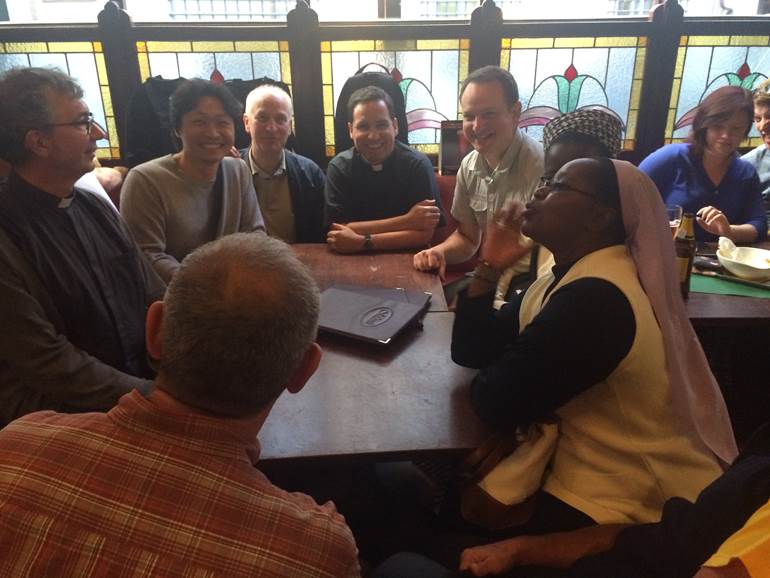
When Cardinal Pell responded from Rome to the questions of the Royal Commission of Australia regarding the Ballarat cases, a group of victims or survivors was present. The next day, we met with them. They told us they did not want to harm the Church; all they wanted was for their suffering to be recognized, for support through therapy, and for no other child to experience the devastating trauma they endured. At the end of the meeting, we greeted each one individually. When I shook hands with one of them—it’s hard to express what I saw in his eyes—I perceived anger and deep suffering. He was wearing a T-shirt with a photo of himself at age 12, the age when he was abused.
At the end of the diploma program, we met another French victim who described her spiritual journey and how she has been reconnecting with God, albeit with great difficulty. Her relationship with Him is deeply damaged by the abuse she suffered from a priest friend of her family over 35 years ago.
This does not leave you indifferent. It awakens many feelings: sorrow, because there is real harm; shame, because as priests we are called to bring people closer to God, and such behaviors push them away, especially since the priestly figure is viewed with suspicion; helplessness, because the healing process is very long and difficult, and not all who have suffered sexual abuse as minors manage to overcome it.
In light of what you have seen in this course, how do you perceive the commitment of the Legion and Regnum Christi in this area?
I believe that our General Director has a genuine commitment, and we are part of the journey. Our accreditation standards are appropriate, and from what I saw in the course and was told when sharing it with directors, they respond to what the Church is asking in this field for prevention, care, and supervision. In countries like the United States and Ireland, we have surpassed accreditation by external agencies.
Some territories are developing or already applying safety procedures and protocols for our educational works, volunteers, etc. There are serious efforts in training in this area, although there is still a long way to go.
In April, a congress on the topic of child sexual abuse was organized by the Reparare Center of the School of Psychology at the Universidad Anáhuac México Sur. This center aims to dedicate itself to research, offer training courses to help prevent and address abuse of minors and vulnerable adults, and eventually assist in certifying policies and protocols for safe environments. In some way, they want to replicate aspects of the CCP’s experience, with whom they are already in conversation. I believe this is the first initiative of its kind in Mexico and offers a promising future for children and youth.
The big challenge is to ensure that all these standards and prevention measures are implemented everywhere. The topic is unpleasant, and many prefer to ignore or evade it. I was struck by how Mr. Johannes-Wihelm Rörig, the German government’s independent commissioner for issues related to child sexual abuse, said that in some institutions in his country, these policies are not taken seriously until a tragedy occurs… We should not wait for someone else to suffer abuse before reacting. This cannot happen to us as children of the Church, nor to any of our institutions. This matter is an urgent priority that admits no delays.
Each member of the diploma program had to do a written assignment. What was yours about? What elements do you highlight?
Let me give an example to answer. When we travel on a road, sometimes we give in to the temptation to exceed speed limits. If a police officer is visible or we have a well-placed speed radar, we always reduce our speed. In the field of abuse prevention, it is very good and even necessary to have codes of conduct and guidelines. But I believe that, to be truly effective, we need to reinforce the human formation of priests, because it is not correct to see certain conduct patterns as external impositions; rather, they should be attitudes and behaviors embraced by personal conviction. For this reason, I chose the topic, “Human formation as a response to child sexual abuse.”
Since the Second Vatican Council, but especially following the scandals of priestly abuse, the pontifical magisterium, beginning with John Paul II, Benedict XVI, and Francis, has insisted on paying more attention to the selection and formation of future priests.
Contrary to some simplistic interpretations, sexual abuse is not caused by the commitment to celibacy. In fact, 96% of abuses occur in contexts where the abuser is not bound by a celibacy commitment. Priests who have failed in this area have not lived their commitments in a healthy and balanced way, and I believe this is due to a lack of human formation.
In the John Jay Study, commissioned by the U.S. Conference of Catholic Bishops to understand the phenomenon and scope of child sexual abuse in the United States, it was found that half of the accused priests had been ordained before the 1960s. The statistics show a notable reduction in allegations of child sexual abuse by the mid-1980s. This corresponds to a shift in focus after the Optatam Totius document, which paid more attention to seminary formation. Since then, there has been a continuous effort to integrate dimensions of personality such as self-awareness, the ability to establish and maintain interpersonal relationships, emotional maturity, psychosexual development, and the integration of one’s own sexuality. Likewise, training to face the challenges of celibacy and chastity in priesthood.
In the same study, it was concluded that most abuses were not committed in the early years of priesthood but after 10 years of ministry. Fatigue, stress, activism, neglect of spiritual life, loneliness, and abandonment of community and fraternal life wear down the priest. The combination of all these elements, along with certain often unconscious emotional deficiencies, can open the door to possible abuse or serious faults in living out celibacy.
Just as we care for physical health and spiritual health, we should also care for and monitor our mental and emotional health. This is what the Congregation for the Clergy requests in the Directory for the Ministry and Life of Priests.
What recommendations would you give to current and future formators?
I believe that formators, especially those working with adolescents, should be trained and informed about child sexual abuse. Fortunately, in many places, there are quality courses, and it’s enough to be interested. This diploma program helped me realize that ignorance on these topics and the culture of silence surrounding them are what allow abuse to occur and persist.
Formators must know and help others to understand and internalize the codes of conduct. This will enable us to prevent abuses, detect signs that something wrong is happening so we can intervene promptly, and also understand procedures for acting when, unfortunately, abuse occurs. One of the most painful things for victims is that often they are not believed when they come forward.
At the same time, adequate and sufficient information should be provided to children and adolescents in our institutions so they can recognize inappropriate situations, react by rejecting them, and report to the appropriate authorities.
Another essential aspect is to deepen human formation itself. We must accompany each adolescent and young person in shaping an integrated personality. Let us not forget that formation is a lifelong commitment, not ending with priestly ordination, and priests also need ongoing support, accompaniment, encouragement, and understanding.
Being priests is not a privilege or a right but a responsibility. Each called person must understand the implications, social expectations, and the power associated with our role as priests. This sacred authority is meant to love and serve others, not to exploit it. We must also communicate the joy of being priests, for the experience of our vocation is not a “no” to many things but a “yes” to a Love that truly fulfills all the longings of our hearts.