 P. Manuel Aromir, LC
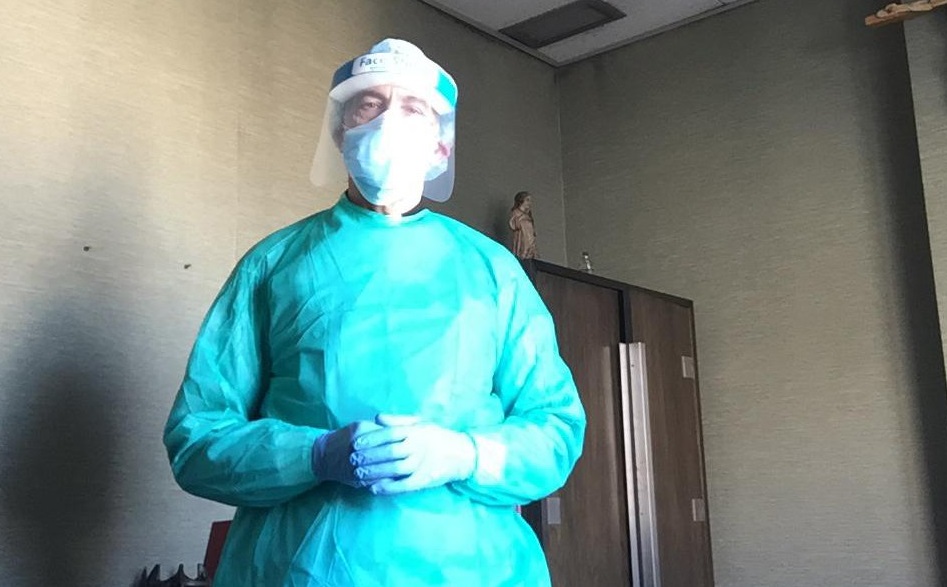
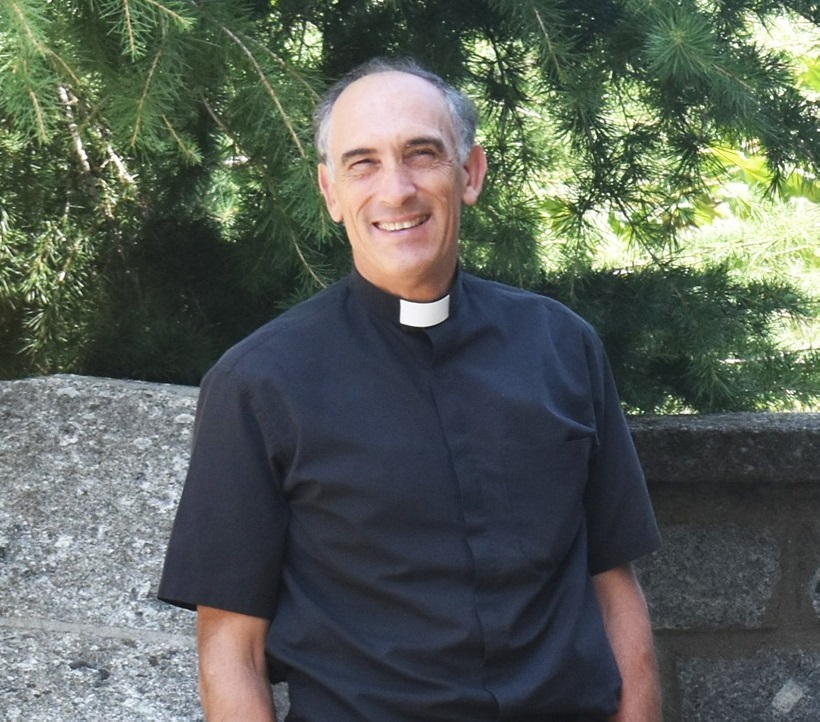
Father Manuel Aromir, LC is accompanying coronavirus patients at the Sacred Heart University Hospital in Barcelona. It is a medical center he knows very well because his mother passed away there a few years ago. He tells us that at first he was afraid, but then it passed. “It’s very easy for patients to share their lives and their deepest concerns. Some, a thorn they have embedded and need to heal,” he explains. Father Manuel is learning many things from this experience: “The value and effects of the sacramental anointing and communion; the importance of listening to the last words of a terminally ill patient; the strength of the tenderness of nurses, volunteers, and myself as instruments of God’s love.” Since March 30th, Father Manuel, who is also the director of the adult section of Regnum Christi in Barcelona, goes about four times a week, several hours a day, to hear confessions, bring communion, administer the Anointing of the Sick, listen, heal, and share with them.
Where the heart leads you
How did this happen?
Since the beginning of the pandemic, I felt I could be helping the sick who were in need and alone. I have always admired the vocation of doctors, and it was an opportunity to feel like a healer of souls.
Did you feel called in any way?
Yes, I had the concern, and I shared it with some fathers of the community. It came from within; it’s one of those intuitions that cannot be suppressed; and it was combined with a request for support from the archbishopric. Also, at this hospital, I accompanied my mother in her final moments, after a long suffering, nearly 20 years ago, and in that same hospital, my brother’s wife, whom I care for very much, dedicated her life as a doctor. I also heard her confession, gave her the anointing, and prayed with her before she peacefully passed away; it seemed to me that being able to do this small service was a way to support her work and to ease the suffering of people like my mother.
Were you afraid?
I experienced some anxiety (perhaps fear of the unknown) during the first two days, then it disappeared, and I felt a great peace, knowing that I had many prayers of protection from people and that the Lord would take care of my future, because we are always in His hands.
I felt a great peace, knowing that I had many prayers of protection from people and that the Lord would take care of my future.
How did you make the decision?
By discerning in prayer, with the community and the superior. It was not difficult.
This involved some very serious changes in your life: confinement from your community, your family, your usual apostolates… what has it meant for you? How has your daily life been since that confinement?
Perhaps the hardest part was leaving the community, as these days involved much fellowship and greater knowledge among us. Now, during confinement, I am much busier than before all this, because besides the hospital, many things have arisen remotely.
Do you feel alone? Is community life possible in these special circumstances? How are the other members of your community experiencing it? Is it somehow a mission for everyone?
Well, I thought about this from the start, and I shared it with the community so we could make the decision together. Initially, two fathers from the community came, then only one was needed. Now Brother Jaime will come to accompany the patients and feed them as a volunteer. We remain united with the community in various community activities, but virtually or by uniting in prayer at the same time.
And your family? What did they say?
I wrote a message to my brothers to explain, and everyone understood; they responded wonderfully, with affection and some surprise.
And the other members of Regnum Christi in Barcelona?
They also responded very well; some think I am good, but I am simply responding to an inner call from God, and it has not been difficult to follow it.
Living
Have you had previous experience in health ministry? What was your relationship with illness? Has it changed in any way?
I had dealings with the sick, with the dying—normal in priestly life. I have accompanied many people in their last moments in Mexico, Brazil… but not in the extreme and lonely conditions of these days, and all are very elderly.
What is your experience of death?
In the early days, there were many COVID-19 deaths, many each day; it created a very difficult environment for nurses, who still didn’t know how to manage the virus and the crisis. Faces of confusion, fear, and uncertainty were visible. In those first days, I knew that a person I knew and was close to had just died on the 7th floor, and that she had died alone. I felt very sorry for her husband. I went to the body—dressed in protective gear—because I wanted to give her a blessing. The nurses looked at me strangely at first, but then they let me in. They insisted I not touch anything, I entered and prayed for the deceased for a while; this also comforted the wife.
Tell me three things you have learned during this time.
The value and effects of the sacramental anointing and communion; the importance of listening to the last words of a terminally ill patient; the strength of the tenderness of nurses, volunteers, and myself as instruments of God’s love. I would also say that God has many instruments of salvation, that you are one more, and that there are many angels.
Have you discovered anything about how you would like to live? And how you would like to die? And about your priestly vocation? And about the charism of Regnum Christi?
When I was discerning whether to go to the hospital or not, since I didn’t know the real risk (I am not an expert, and I hear all kinds of things…), I thought that if God had placed this desire in me, He would guide it and lead me where He wanted. Many times I don’t measure consequences, but I follow intuitions, which are more certain than reasons. I felt that if, in the worst case, I got infected and died as a result, that would be the best way to die as a priest. Regarding the charism of Regnum Christi, I wanted from the start to seek volunteers who could help nurses comfort the patients and reach more sick people, because I am called along with others.
I wanted from the start to seek volunteers who could help nurses comfort the patients and reach more sick people, because I am called along with others.
And with this experience, has Jesus revealed something new to you about Himself, about yourself?
I have been able to experience more closely that Jesus identifies with each of the sick, especially those in greatest need, in the great protocol of Matthew 25.
Is there any novelty in your relationship with Jesus since you started?
I have a strong desire to pray, to be alone, to meditate on the Gospel, to celebrate the Eucharist. There has also been a personal change: in maturity, serenity, and purity of intention… Also in the importance of evangelizing mission. Suffering without Jesus is different from suffering with Him.
I have a strong desire to pray, to be alone, to meditate on the Gospel, to celebrate the Eucharist.
Of what heals, of what cures
We have seen healthcare workers and those involved in hospitals as heroes risking their lives to help others. Do you see yourself that way? What is your experience in this regard?
Well, I don’t see myself as a hero, far from it; I have valued and admired the medical and healthcare vocation. I have seen nurses under great stress and agitation, afraid, anxious, worn out, and tired at the end of their shifts… and I see that they surpass me a hundred times. They are there 24 hours straight, I only go for a few hours…
How is your relationship with hospital staff: doctors, nurses…?
Good, available, and collaborative. During the initial crisis, it was very difficult to establish a more personal relationship because they were overwhelmed with many urgent matters, until I learned that there was a calmer moment each day, at the start of the night shift, when we could talk better.
How do you work with the patients? Do they call you, do you offer to visit them?
According to the hospital’s policy, COVID-19 patients can only be visited if the patient or family requests it. However, sometimes, talking with nurses, they suggest I visit someone or I ask to see someone, and thus we expand the group of patients I attend. Usually, the person next to someone I am attending joins the conversation, and sometimes they also request the anointing, for example.
“The sick are afraid, they seek meaning in all this, and it’s not easy: they need to find eyes, a smile, a hand, a presence”
And what do they tell you?
It’s very easy for them to share their lives and their deepest concerns. Some have a thorn embedded that they need to heal. Sometimes they talk about their children, grandchildren… or ask me to say things to their relatives.
Do you talk or listen more? What does this mission mainly consist of?
Well, it’s clear that the less you speak, the better; just looking (even through a face mask), attending, or holding their hand is always important. It’s essential to find the best way of communication, but there must be a channel that clearly shows closeness. And of course, bringing them the sacrament, Jesus’ word, prayer… helping them pray.
Have you cried? If yes, why?
I have been moved at times; the saddest moment was when I knew a lady needed to talk more to heal a wound, and I didn’t arrive in time the third time, and she died; I could have gone the day before if I had organized myself, and I had her in mind, but I didn’t make it. But then God showed me that I am just another instrument of salvation or comfort.
The coronavirus patients have been very lonely in hospitals, without visitors… How do they cope with loneliness? Many surely think they won’t get out of there.
Yes, loneliness is the most dramatic, because dying next to a loved one is natural. They need affection, attention, to feel important to someone, to be loved in those moments; many would like to say something to loved ones… but they haven’t been able. Several times, I heard cries for help from the hallway; it was hard because I couldn’t go in.
Do you confess, give communion, anoint the sick… but what about those who don’t know Jesus?
It’s difficult to reach them under current conditions, because you can only go into a room if the patient or family requests it. There was a lady whose daughter sent me to “confess her and give her the anointing,” but when she saw me, she said: “Who sent you? Am I going to die?…” I told her: “Look, I’m not a doctor, I don’t know when you will die, but I believe it’s no coincidence that I am here, and I can give you a blessing if you want…” In the end, she liked that I was there and wanted to talk; she had a thorn embedded, and I think talking helped her.
Among the patients you have attended, do you remember any particularly?
Yes, I also attended to two elderly Salesian priests, aged 82 and 85. It comforted me greatly; I thought that one day I might be there too.
Some say that the pandemic could be a blessing from God, but of course: that’s usually said by healthy people. What do the sick say?
They are scared, afraid, surrounded by people in astronaut suits with faces covered… it seems like science fiction; I think they try to find meaning in all this… but amidst pain and fear, it’s not easy. They need to find eyes, a smile, a hand, a presence.
They need to find eyes, a smile, a hand, a presence.
Jesus is alive. Jesus heals. He cures the easy and the hard. Has He healed you of anything during this time?
He makes me relativize my pains or my “wounds” from the past, and urges me to give meaning to human suffering on the cross of Jesus. He makes me see more clearly that only Jesus heals deeply.
Pim, pam, pum: I say a word and you respond with another
Life / gift
Bed / suffering
Cross / salvation
Mask / distance
Cry / empathy
Visit / Matthew 25
Family / in Christ
Die / live
Hug / essential
Hallway / dramas
Nurse / Angel
Friend / treasure
Hospital / school
Priesthood / Christ
Silence / Mary
Listen / look
A word / mercy
A song: In the name of love
A book: Looking at Christ
A prayer: Father, if it is possible, take this cup from me