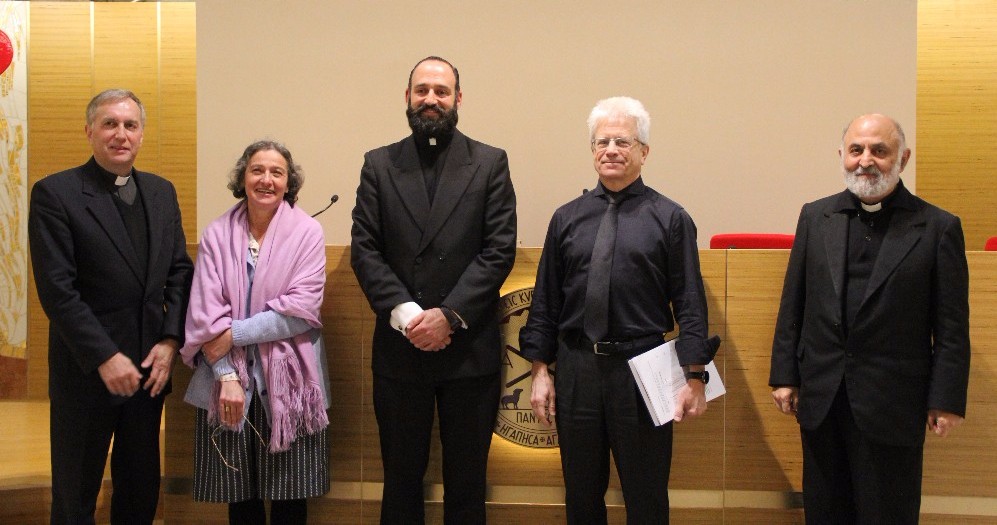
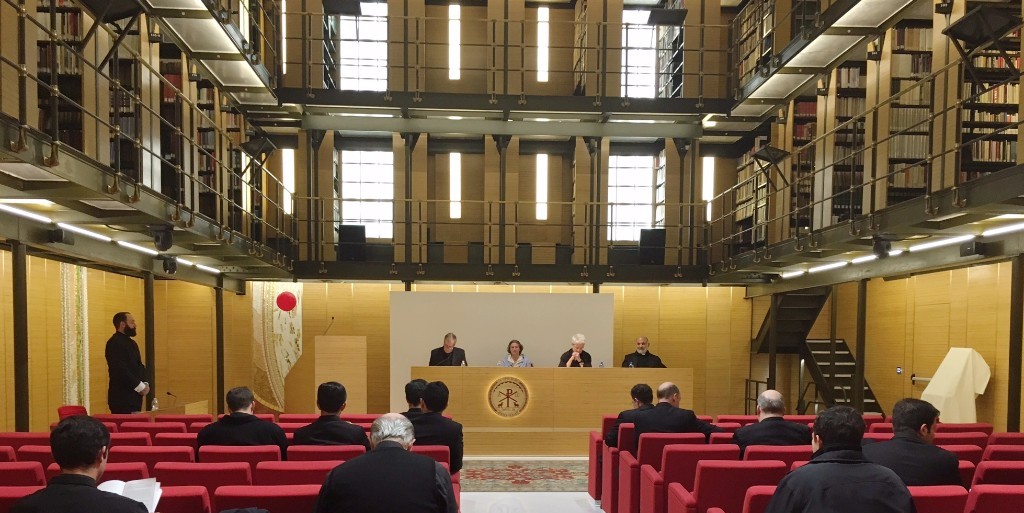
Father Manuel Cevallos, LC defended his doctoral thesis on November 30 at the Pontifical Oriental Institute. The title of his thesis was “Notes on the Maronite Ecclesiology Preceding the Great Synod of 1736: A Study Based on Some Significant Documents from the 17th Century”. “This synod was the adaptation for the Maronites of everything stipulated at Trent; the thesis reconstructs the Maronite ecclesiological conception from a historical-theological perspective based on the study and editing of documents,”
commented Father Manuel.
“I decided to approach this topic because I needed to specialize in ecclesiology for teaching purposes (from January I will be a professor of ecclesiology at the Institute of Higher Studies of Tamaulipas) and I found it necessary to understand Eastern ecclesiology. I chose the Maronites because they are one of the two Eastern Catholic Churches that do not have an Orthodox counterpart and because they are the most present Eastern Church in Mexico,”
said Father Manuel. “The plurality of the Church in its fundamental unity in Christ was the key for me to begin considering Christian East, and particularly the Catholic Christian East,”
he added.
Father Manuel’s doctoral thesis is divided into a general introduction, a historical conceptualization, two parts, and a conclusion. During his presentation, Father Manuel explained that “the first part of the thesis consists of the editing and translation into Spanish of the groups of archival documents selected for study, each accompanied by an analysis of the aspects highlighted during the study.”
He mentioned that the results of this analysis could be summarized in five points: the total or centralized authority of the patriarch over the Maronites; the exercise of the munera episcopal by the Maronite patriarch according to his own customary patrimony; the non-residence of Maronite bishops in their dioceses; the self-awareness of the Maronite patriarchs as the legitimate Catholic patriarchs of the East; the fidelity of the Maronites to union with the seat of Rome, which was manifested and lived in fidelity to their own traditions. Father Manuel noted that the most outstanding documents in this first part of the study were the memorial of Patriarch Yūḥannā Maḫlūf from 1625 and the letter from Archpriest Giovanni Hesronita, also from 1625.
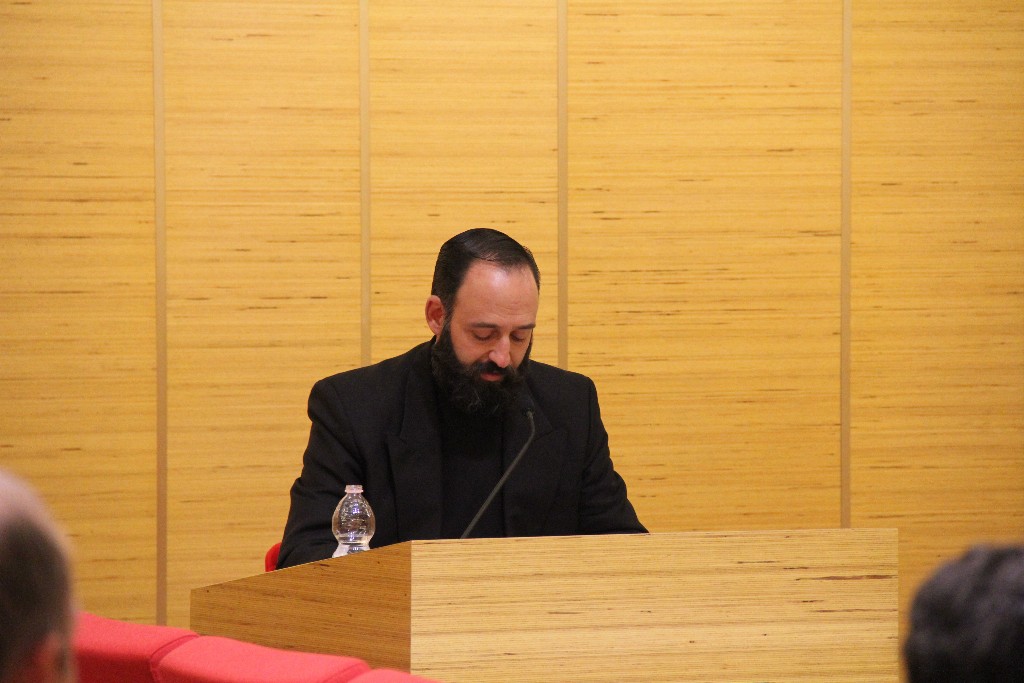
“The second part of the thesis, structured in four chapters, offers a more comprehensive view of the Maronite ecclesiological self-understanding, analyzing collectively the most relevant aspects that emerge from the analysis of each document,”
said Father Manuel during his speech. “The first chapter deals with the centrality of patriarchal authority, a predominant element in the contents of the analyzed documents, emphasizing the community’s need, which arose around the monastery of Beyt Marūn, to self-provide a figure that the community could recognize as its authorized representative, both ad intra and ad extra […] The second chapter focuses on the relationship between the patriarch and the bishops, a relationship that in turn reveals notable aspects of the structure of the Maronite Church […] Considering the general structure of the Maronite Church before the 1736 synod, the third and fourth chapters of the second part examine the position of the Maronites within the Catholic Church,”
added Father Manuel.
He also mentioned that during the research process, the most challenging part was “integrating two very different methodologies into a single investigation: the historical-exegetical (called “history of mentality”) and the theological.”
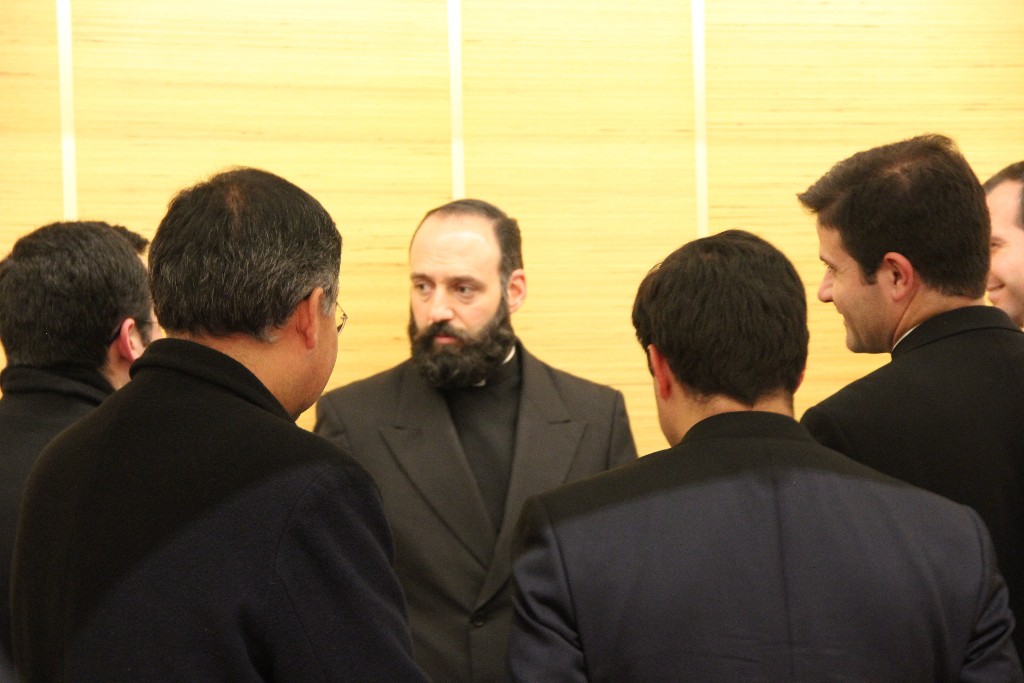
Father Manuel explained that, as a response and summary of his research, the following elements can be highlighted: “the first can be stated as follows: ‘the way of being Church’ of the Maronites corresponds to a conception, or rather, a patriarchal monarchical matrix […] The patriarch is responsible for preserving and ensuring respect for the Church’s customary patrimony because this identifies the Maronites as Antiochian Catholics; the expression of this faith propio more also manifests their communion with Rome. To safeguard this responsibility in the specific life circumstances of the Maronites, the exercise of the patriarch’s authority was monarchical, that is, autonomous and fully centralized; collegiality was only present in the election of the patriarch. The second element is represented by the ecclesial experience of the Maronites: it is a sui generis experience carried out in the particular manner of exercising the munera episcopal by the patriarch, which is reflected in the internal structure of the Maronite Church.”
“Finally, we hope that the traits of the Maronite ecclesiology prior to the 1736 synod […] can open the doors to new proposals for a more complete and organic Maronite ecclesiology. I hope to have contributed to a better understanding of a Church that for centuries has proven to be, amidst trials and difficulties, a faithful daughter of the Antiochian tradition and a witness to Christ the Lord,”
concluded Father Manuel.