Education has the power to transform lives, open up opportunities, and strengthen communities. For over six decades, the Mano Amiga school network has operated with this conviction. Its mission is to provide a high-quality, holistic education inspired by human and Christian values—one that fosters personal growth and contributes to social transformation, particularly in developing contexts.
This initiative began in 1963 in Mexico City, born of a desire among parents at the Instituto Cumbres to extend the same education their own children received to children facing economic and social barriers. They started by serving children from the village of Zomeyucan; eventually, the site evolved into a primary school. Since then, the network has grown significantly, extending its impact to seven countries: Mexico, Guatemala, Chile, Colombia, Argentina, Venezuela, and the Philippines.
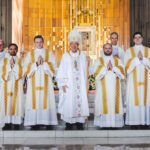
In this interview, Fr. José de Jesús Franco Castellanos, L.C., and Fr. Luke Gil, L.C.—chaplains at Mano Amiga Santa Catarina in Mexico and Mano Amiga Bello in Colombia, respectively—share their experiences, discuss the strengthening of their educational mission, and outline some of the challenges they face.
What path led you to discover the Mano Amiga mission, and how do you contribute today, in your respective roles, to transforming the lives of your communities?
Fr. José de Jesús Franco, L.C.:
I completed my apostolic internship at the Instituto Cumbres in Mexico City and later served as the school’s director. That is how I learned about Mano Amiga Zomeyucan, as the question of how we could further support its work was a recurring topic at the school. Since then, I have had the good fortune of getting to know six other Mano Amiga campuses across the country.
As the chaplain for Mano Amiga in Monterrey, I provide spiritual guidance to the students and their families. The most important thing is to help students, staff, and parents deepen their understanding of the faith and strive to live it out. We strive to help them know and love Jesus Christ more deeply, and we also place great emphasis on preparing students to receive the sacraments of Confession and the Eucharist.
At the heart of this work is a readiness to attend to anyone who asks; I therefore make an effort to be present during some recess periods, as well as to visit classrooms from time to time to share a brief message. When I greet teachers and coordinators, I offer them congratulations and thanks, and I acknowledge their hard work. Sometimes I stand at the door during student drop-off or pick-up to greet families. I aim to be an approachable presence—someone with whom they can talk, share a joy, or express a concern.
Fr. Luke Gil, L.C.:
Ever since I entered the novitiate, I had heard about the Mano Amiga schools, and it was a mission that always appealed to me. Over time, various life circumstances—and, above all, a call from God—led me to Mano Amiga Bello in Colombia, where I now serve as chaplain.
Beyond the day-to-day events common to all schools, my priority is to provide pastoral accompaniment to students, parents, and staff. This accompaniment takes place through the sacrament of Confession as well as spiritual and personal guidance. I am also part of the pastoral team, serve as the ECyD director, and celebrate the Eucharist daily. I strive to remain close to the students, spending time with them and supporting them through the various stages of their growth.
Mano Amiga schools speak of a holistic education that encompasses spiritual, intellectual, human, and social dimensions. How does this approach translate into the students’ daily lives and the educational program?
Fr. Luke Gil, L.C.:
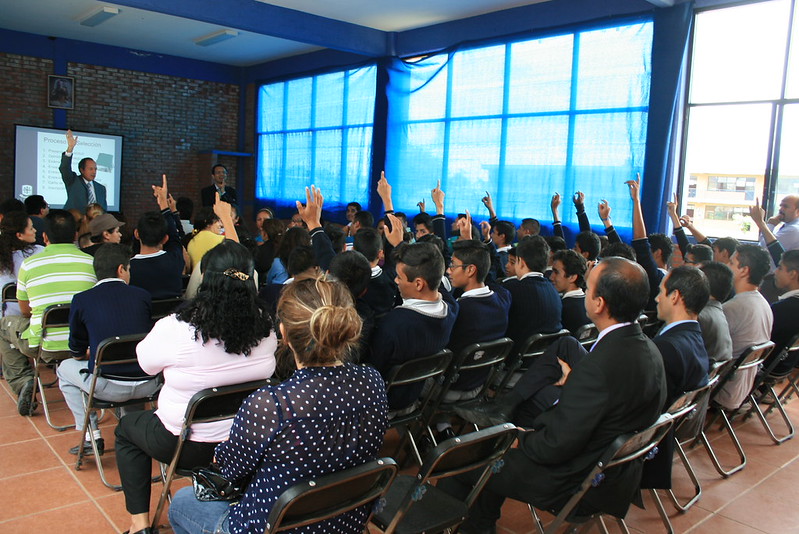
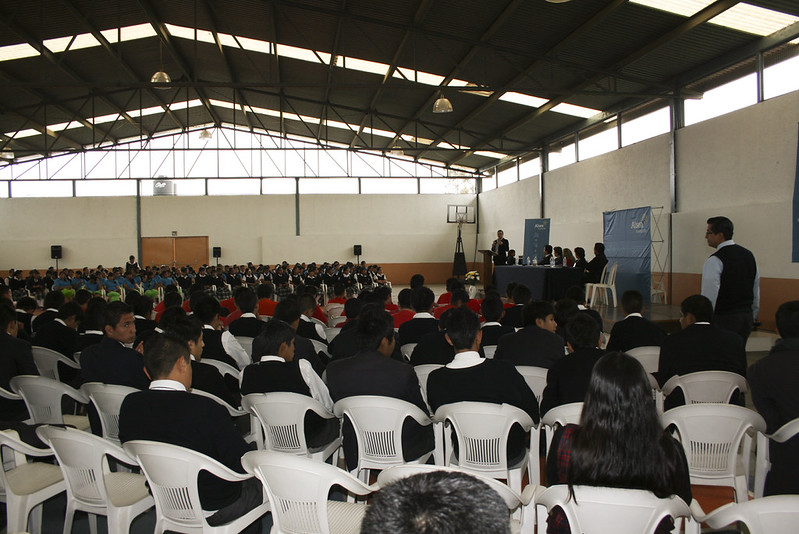
At Mano Amiga, hardly any two weeks are alike. Holistic education extends beyond the classroom through civic ceremonies, Eucharistic celebrations, personal guidance, group activities, and opportunities for social interaction—such as the inter-class soccer tournament. Each of these experiences contributes something unique and helps shape individuals in every aspect of their being.
Ultimately, our goal is for each student to discover their talents and strengthen their character. We want students to learn how to relate to God and to others in an authentic way.
Fr. José de Jesús Franco, L.C.:
On one hand, there is spiritual life, which serves as the pillar guiding and sustaining the school’s efforts. A person is a unified whole; we cannot fragment them as if they were merely four separate departments within an institution. We want every aspect of the student to grow in harmony, even though we know this is not always easy.
On the other hand, character formation is what distinguishes Mano Amiga schools: fostering responsibility, cultivating a sound conscience that recognizes and pursues the good, strengthening the will, and encouraging proper personal presentation, among other aspects.
Regarding the social dimension, we aim to foster respectful treatment of others—including elders, teachers, and peers—and to instill habits such as greeting people and expressing gratitude. We also encourage the joy of socializing, playing, and participating in activities that allow students to express themselves in public. Another fundamental element of holistic education is the motivation of both students and staff (teaching and administrative). Motivation makes it possible to set higher standards; one cannot truly shape a person without setting high expectations, yet demanding excellence is ineffective if motivation is lacking.
How has Mano Amiga impacted the families and communities where it operates?
Fr. José de Jesús Franco, L.C.:
I often hear students say, “My parents say the best thing they can give me is a good education; that’s why I’m at this school, and I’m very happy.” These moments reflect the value many families place on their children’s education. Furthermore, the neighborhood’s infrastructure has improved, as have the homes of many families. The reality is that this is a collaborative effort involving the municipality, the neighborhood, and the school.
Although the environment sometimes presents challenges, a large number of graduates have managed to pursue university studies and access job opportunities that allow them to transform their own lives and those of their families.
Fr. Luke Gil, L.C.:
A few months ago, I ran into the mother of a graduate who had gone through very difficult times during his adolescence. She told me that her son is doing very well now and that both he and his family are deeply grateful to the school and to the people who supported him during that process. Encounters like this allow me to see that the impact of educational work often becomes visible only as the years go by.
There are many stories like this one, and although it is difficult to measure the full impact of Mano Amiga, each story represents a transformation. Little by little, those personal transformations turn into changes that positively impact the communities. In the words of Jesus, “The Kingdom of Heaven is like a mustard seed or a measure of yeast that brings about transformation.”
How does Mano Amiga seek to transform its students through their encounter with God and with others?
Fr. José de Jesús Franco, L.C.:
We strive to help them see Jesus Christ as a friend—a God who is close and present in the school, whom they can visit and pray to for whatever they wish. We seek to form good people who know how to live joyfully and think of others, helping to create a world defined by solidarity. Fr. Luke Gil, L.C.:
We seek to form leaders capable of transforming society because they themselves have been transformed by encounters with many people who have shaped their journey—teachers, administrators, staff members, alumni, priests, consecrated persons, and, above all, God. Each one contributes something valuable to the students’ formation and helps them discover that they are called to serve and build a better world.
How do you, in living out your vocations, contribute to strengthening the educational, human, and social mission through your work at Mano Amiga?
Fr. Luke Gil, L.C.:
Over the years, I have learned that the educational mission offers countless opportunities to serve, as there is always a wide-open field of action. For me, the hardest question to answer in recent years has been: “Where do I begin?”
That is how one grows in the mission while working with all kinds of people: parents, students of all ages, administrators, coordinators, local parishioners, alumni, benefactors, and so on. Touching these people’s lives is an opportunity to serve God.
Perhaps one of the most important lessons I have learned at Mano Amiga is that we are not the protagonists of this work. I realize that I am an instrument. I am learning that my mission often involves stepping out of the center so that He can take the place that belongs to Him.
Fr. José de Jesús Franco, L.C.:
It is deeply enriching to be able to attend to the students, parents, and school staff. The field of education takes time to yield visible fruit, but we know that the Holy Spirit accompanies them and does His work in each person’s heart. Our role is to sow “mustard seeds,” and we hope that a good number of them will germinate and grow, eventually helping to turn the world into a better place.
The experiences of Fr. José de Jesús Franco, L.C., and Fr. Luke Gil, L.C., at Mano Amiga converge on a single certainty: to educate is to sow without expecting immediate results. Every lesson, every gesture of closeness, and every opportunity to serve can take root and, over time, transform a person’s life.
Through the efforts of many people, Mano Amiga continues to make a contribution through holistic formation—an approach grounded in charity, humility, honesty, integrity, and transcendence. To educate is, above all, to sow hope; accompany with patience and trust that God will cause what is beginning to be cultivated today to sprout in each student’s heart.
Photos: Mano Amiga Schools