The reality of prisons often remains hidden from the everyday view of society. However, it is from within these prisons that reflections on the dignity, hope, and reintegration of incarcerated individuals can emerge, highlighting the human and social importance of this sphere.
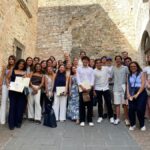
“The Prison as a Disfigured Monastery,” a book published by Edizioni ART, originated from a conference organized in 2025 by the John Paul II Cultural Circles, the Justice and Person Association, and the chaplaincy of the Bollate prison in Italy. The aim was to promote reflection on prison not only as a place for serving a sentence, but also as a place where paths to reconciliation, personal growth, and rebuilding one’s life can open up.
The image suggested by the title has an evangelical meaning: the prison is described as a “disfigured monastery.” Disfigured because it is marked by guilt, suffering, and the deprivation of liberty; a monastery because, as in monastic life, it can become a space of silence, of self-confrontation, and of encountering God.
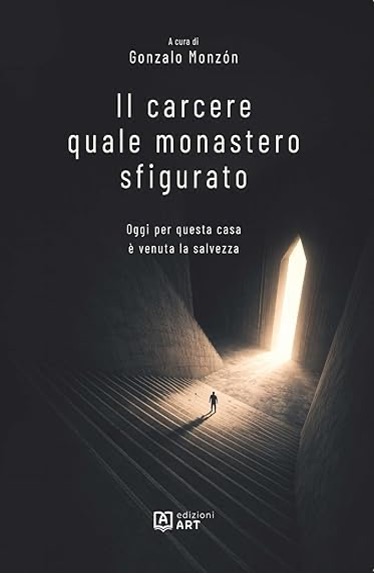
The book’s editor, Father Gonzalo Monzón, L.C., a priest from Barcelona with extensive experience in education and training, offers a reflection in the introduction linked to the Jubilee of Hope. From this perspective, prison appears as a place where processes of conversion, reconciliation, and rediscovery of the meaning of life can arise, since prison is understood not only as a place of punishment but also as a possible “narrow gate” through which a person can embark on a genuine path of conversion. Behind bars, in fact, processes of reconciliation, rediscovery of one’s own dignity, and openness to God’s grace can mature.
The book’s pages bring theology, spirituality, pastoral experience, and legal reflection into dialogue, showing how Christian hope is not merely a consolation, but a force capable of transforming life even in the most difficult situations. From this perspective, prison becomes a place where the Gospel continues to manifest its saving power, reminding us that no one is excluded from God’s mercy.
The importance of prison ministry
For years, the Church has considered this area one of the most concrete expressions of its commitment to people who live in situations of exclusion. Prison pastoral care is not limited to religious care, but seeks to accompany human, social and reintegration processes.
Various Church initiatives have emphasized the need to listen to the voices of those deprived of their liberty and to recognize their dignity beyond the mistakes they have made. In this sense, the prison system is seen as one of the human peripheries that require special attention from society and the Church.
The invitation is to rediscover a central truth of the Gospel: even in places that seem furthest from hope, Christ continues to seek and save what was lost.
About Fr. Gonzalo Monzón, L.C.
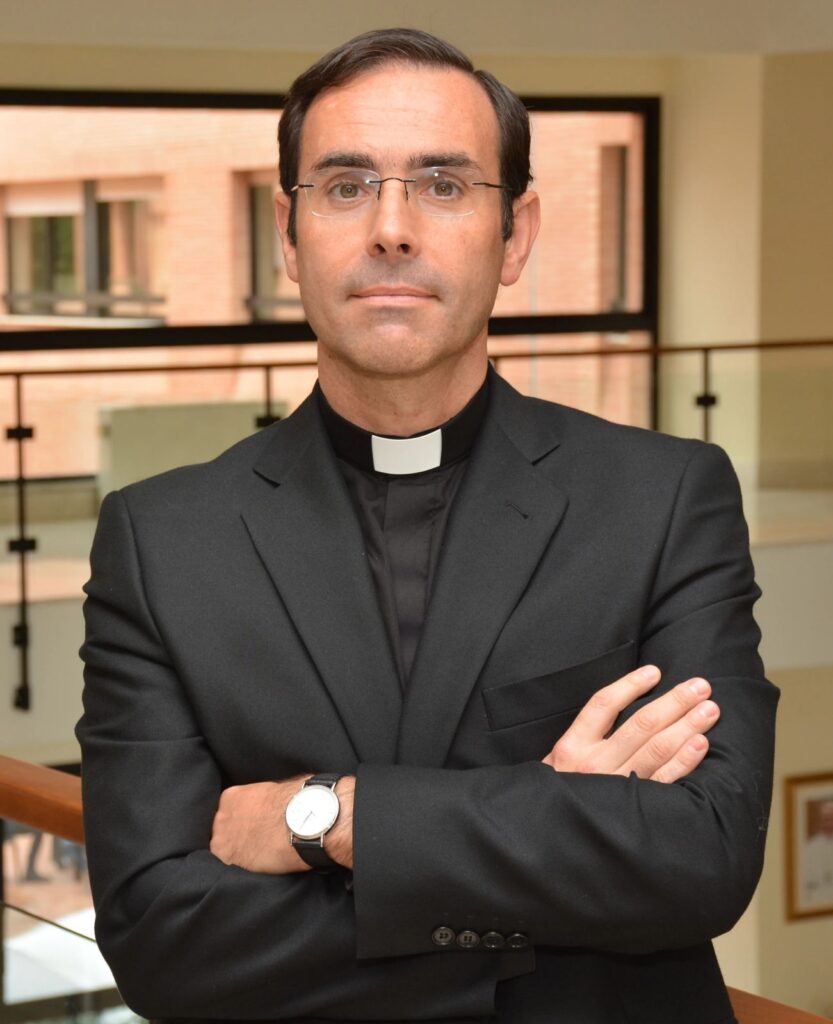
Father Gonzalo Monzón, L.C., was born in Barcelona, Spain, in 1973. He is a priest of the Congregation of the Legionaries of Christ and obtained a degree in Philosophy, Dogmatic Theology and Religious Sciences at the Pontifical Athenaeum Regina Apostolorum in Rome. In addition, he has completed various master’s degrees in educational leadership at the University of Cambridge, the Francisco de Vitoria University of Madrid, the University of Alcalá de Henares, the Anáhuac University of Mexico and the National University of Distance Education of Spain.
He has extensive experience in the field of education, having worked in schools, universities, and associations, and dedicated himself to the education of children, adolescents, and young adults. He organizes comprehensive training and leadership programs, as well as humanitarian and social work initiatives focused on human, social, cultural, and athletic development in schools and universities. He was the director of the Center for Integral Formation at the European University of Rome and currently collaborates with the same institution on postgraduate programs.
Author of numerous books on education, culture, and liturgy, as well as on the Holy Land, he has published works such as Religious Competence in the Teaching of Catholic Religion (IRC) (2022), Pilgrimage to the Holy Land (2023), Dialogue between Faith and Reason (2025), and Rooted in the Word (2025). He regularly organizes training courses and pilgrimages to the Holy Land in collaboration with the Sacerdos Institute. He currently teaches at the Regina Apostolorum Pontifical Athenaeum and provides educational training and consulting services in collaboration with various companies and associations. He is the director of Lumenia and ART Editions, chaplain of the Francophone Mission in the Diocese of Milan, and a member of the John Paul II Cultural Circles.